Tuck End Box Styles Explained: Straight, Reverse and Auto Bottom
How each tuck closure folds, where it suits and how to choose one for your product.
By the Tuck Boxes carton desk · Updated
What does tuck end actually mean?
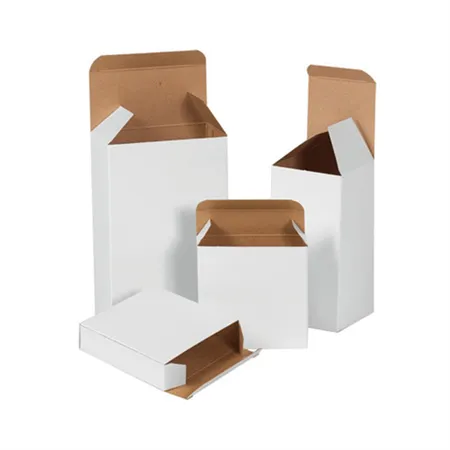
Tuck end boxes are folding cartons whose ends close with flaps that slide inside. No glue or tape holds those flaps shut. Friction and two small slits at the shoulders of each flap keep it in place.
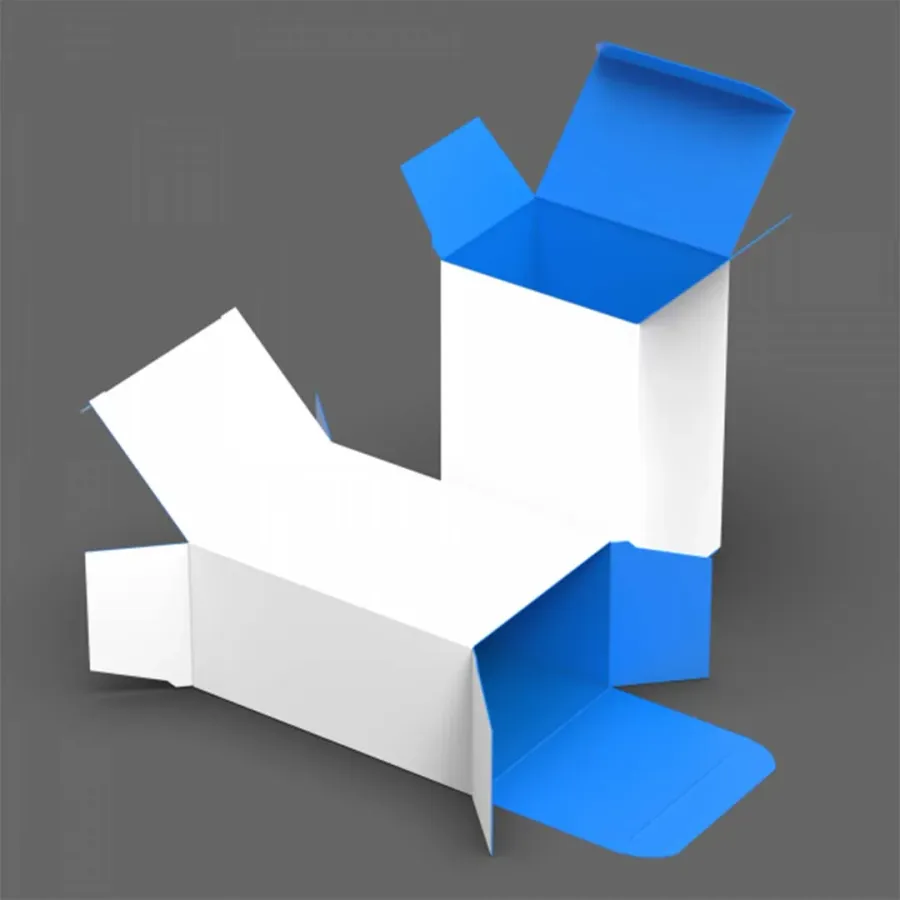
Each end has three parts. The closure flap carries the tuck, and two dust flaps fold in first from the side panels. The dust flaps stop the product sliding out of the corners and give the tuck something to press against.
Every style in this guide arrives flat, glued along one side seam. You push it open, fold the base, drop the product in and tuck the top. The differences sit in how the base and lid are built.
A good tuck closes with a light push and opens with a fingertip. If it is too tight, the flap bows. If it is too loose, the box opens on its own in a bag. Both come down to the size and the depth of the tuck flap.
How does a straight tuck end box close?
With a straight tuck end, both closure flaps hinge from one panel, usually the back. Both tucks slide in towards the front. Seen from the front, the carton shows a clean face with no flap edges at either end.
That clean front is why brands choose it for shelf cartons, lipstick boxes and card packs. The trade-off is that the flat blank is a less compact shape, so it nests less tightly on a print sheet. Our straight tuck end boxes page shows the style with photos of the flat and folded carton.
Why do the flaps swap sides on a reverse tuck end?
A reverse tuck end has the top closure hinged on the back panel and the bottom closure hinged on the front. One tuck slides forwards and the other slides backwards. Hold the flat blank up and the two flaps sit diagonally opposite each other.
That diagonal layout lets blanks interlock on the press sheet, which often uses less board per carton. It is the everyday carton for serums, beard oil, supplements and small electronics. The front shows one flap edge at the bottom, which most buyers never notice on a shelf.
See the reverse tuck end carton style for typical sizes and finishes.
When is an auto bottom worth choosing?
The base of a tuck end auto bottom, or crash lock, is glued at the factory. When you squeeze the flat carton open, the four base flaps swing down and lock into a floor in one movement. The top still closes with a normal tuck.
Packers like it because there is no base to fold by hand. It suits candle jars, bottles and anything dropped in from above. The floor is a locked layer rather than one tucked flap. The tuck end auto bottom boxes page has photos of the base folding.
The glued base adds a step at the factory, so expect the written quote to reflect it.
Full flap and 1-2-3 bottoms: what is the difference?
A full flap auto bottom uses two long base flaps that meet across the whole floor, with shorter flaps underneath. It gives a fully covered base on wider cartons, where a crash lock would leave gaps.
A 1-2-3 bottom, also called a snap lock, is not pre-glued. You fold four base flaps in a set order, one, two, three, and the last flap locks the others down. It packs flat like a straight tuck but gives a locked floor. That is why it is common on printed mug boxes with locking bases.
Both styles take a little longer to fold by hand than a plain tuck, but less time than taping a base.
Where does a tuck top box fit in?
A tuck top is a different shape. Instead of tuck flaps on the narrow ends, a hinged lid lifts from the long face. It closes with a tuck flap at the front. Dust flaps often sit at the sides of the lid.
It suits flatter products that you want to lift out rather than slide out. Card decks, coffee pods and wax melts are common examples. Our custom playing card box designs use this closure on most sample layouts.
Because the lid hinges on a long edge, the opening is wide. That makes it easy to lift a deck or a row of pods straight out without tipping the box.
The six closures side by side
The table below compares how each style opens and what it tends to suit. You can ask for any of these closures on any carton we make.
| Closure | How the base forms | How the top closes | Often used for |
|---|---|---|---|
| Straight tuck end | Tuck flap from the back panel | Tuck flap from the back panel | Shelf cartons with a clean front |
| Reverse tuck end | Tuck flap from the front panel | Tuck flap from the back panel | Everyday light retail cartons |
| Tuck end auto bottom | Pre-glued base locks as the box opens | Tuck flap | Jars, candles and bottles |
| Full flap auto bottom | Long glued flaps meet across the floor | Tuck flap | Wider cartons wanting a covered base |
| 1-2-3 bottom | Four flaps folded by hand in order | Tuck flap | Mugs, glassware and boxed gifts |
| Tuck top | Fixed base panel | Hinged lid with a front tuck | Card decks, pods and flat products |
All six arrive flat. The auto and full flap styles have their base glued as well as the side seam.
How do you choose a closure for your product?
Work through these questions in order. Most buyers have their answer by step four.
- Decide how the product goes in: slid in from an end, or dropped in from above.
- If it drops in from above and has a solid base, such as a jar, start with an auto bottom.
- If it slides in and the front must look clean on a shelf, start with a straight tuck.
- If neither matters much, a reverse tuck is the plain everyday choice.
- For a wide gift such as a mug, compare a 1-2-3 bottom with a full flap base.
- For a flat item lifted out from the top, look at a tuck top.
- Check how many cartons you will pack per day, since a glued base saves folding time.
Once you have a style, measure the product carefully. Our guide on measuring inside sizes and clearance walks through it.
Does the closure change how boxes pack and post?
Every style arrives flat, so storage space is similar. The difference shows when you fold them. A straight or reverse tuck takes two tucks per box, while an auto bottom needs only one.
For a few dozen cartons a week, folding time hardly matters. For a busy packing bench, a glued base can save real effort over a long run.
Flat cartons are packed in bundles and sent with free tracked UK delivery in 2 to 3 business days after production. Store them flat and dry until you fold them, so the creases stay crisp.
Common mistakes when picking a style
- Choosing a straight tuck for a jar that needs a flat floor. The tucked base flap can bow under a rounded bottom.
- Picking an auto bottom for a very shallow carton. The crash lock flaps need room to fold, so very low boxes suit a tuck or tuck top better.
- Forgetting the dust flaps. On a narrow end under about 20 mm, they become small and fiddly to fold.
- Placing key artwork on a tuck flap. It disappears inside the box once closed.
- Asking for a window across a fold line. Windows sit inside one panel, clear of the creases.
If you are unsure, send the product size and how you pack it through the written quote request form. We suggest a closure and show it on your free proof.