Custom Display Tuck Boxes with a Printed Header Card
From £0.25 per unit on a written quoteFree proof · 4–6 business days · Free tracked UK delivery
Counter trays that open into a tilted display, with a tall printed header at the back and a low lip at the front. They hold rows of your smaller cartons by the till, and every run is priced in writing.
| Box | Display Tuck Boxes |
|---|---|
| Range | Tuck End Box Styles |
| Usual closure | Tuck end auto bottom |
| How it closes | A tuck flap closes the top and a pre-glued crash-lock base forms itself when the carton is pushed open |
| Other closures | Any tuck closure on this list can be quoted instead |
| Header | Raised back panel above the tray, printed front and back |
| Front lip | Low front wall so every unit can be seen and lifted out |
| Base | Tuck end auto bottom (crash lock) as standard |
| Typical size | About 240 × 160 × 90 mm tray, header about 120 mm above |
| Board | 350gsm white SBS, kraft and other boards on request |
| Printing | Full colour outside; inside print on request |
| Finishes | Matt, gloss or soft touch lamination, spot UV, foil, embossing, as options |
| Extras | Windows, hang tabs, thumb notches and inserts, on request |
| Size | Made to your inside length, width and height in mm |
| Arrives | Flat, side seam and base glued |
| Item | Typical inside size (L × W × H) |
|---|---|
| 12 boxed soap bars, two rows | about 200 × 150 × 70 mm tray |
| 24 lip balms standing upright | about 180 × 120 × 60 mm tray |
| 10 chocolate bar cartons | about 190 × 160 × 50 mm tray |
| 18 small candles or wax melt packs | about 260 × 170 × 80 mm tray |
- Send a logo or finished artwork as PDF, AI, EPS, SVG, PNG or JPG.
- We send the dieline for your size, or place the artwork on it for you, free.
- Every panel and flap can be printed, and the inside on request.
- Nothing is printed until you approve the proof in writing.
| Closure | Tuck end auto bottom | Proof | Free, before printing |
|---|---|---|---|
| Board | White SBS or kraft | Production | 4–6 business days |
| Price | From £0.25 per unit | Delivery | Free, tracked, UK only |
What are display tuck boxes?
Display tuck boxes are printed counter cartons that hold several smaller retail packs at once. A raised header panel carries your brand, the sides slope down to a low front, and an auto bottom base locks open in one push. They arrive flat and stand up in seconds.
They suit counter displays of small items. The cartons arrive flat and fold up at your packing bench.
What is a display tuck box?
It is a carton that works as a small shop fitting. Instead of holding one product, it holds a neat block of them, angled towards the shopper, with your name on a header card behind.
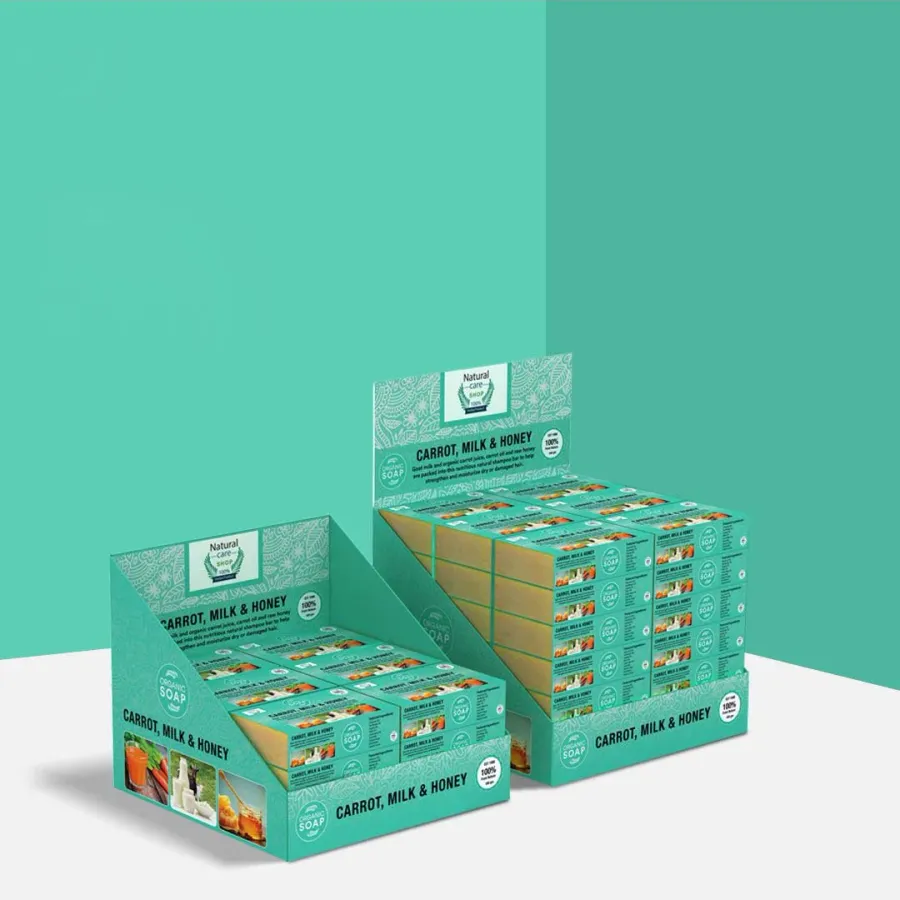
The photo on this page shows two of them filled with boxed soap. The back panel rises well above the tray and carries the brand and product name. The sides slope from the header down to a short front wall, so each row of cartons is easy to see and pick up.
Shops like them because they arrive full, take little counter space and need no fixtures.
Who uses counter display cartons?
Anyone who sells small items through independent shops, salons, cafés or gift stores can use one. The display does the selling when you are not there.
- Soap and bath makers supplying gift shops and farm shops
- Lip balm and hand cream brands placing stock by salon tills
- Confectioners selling bars and treats at café counters
- Wax melt and candle studios stocking boutiques
- Card game, sticker and accessory makers in toy and stationery shops
Why does a display carton use an auto bottom?
A display needs a flat, firm floor, because it will be filled, carried and left on a counter for weeks. The crash lock base gives exactly that.
The base is pre-glued at our end. When the flat carton is pushed open, the bottom flaps swing in and lock together on their own. There is no folding underneath and nothing to tape.
That matters to busy stockists, who can set up a display in seconds. Our page about the crash lock bottom and how it forms shows the base step by step.
How big should a counter display be?
Work from the unit you are selling. Decide how many units the display holds and how they sit, in rows lying flat or standing upright, then measure that block.
Add 3 to 5 mm on the length and width so cartons lift out without catching. The front wall usually stands about a third of the unit height, high enough to hold the front row, low enough to show the label.
Then check the counter. Many small shops have little more than 300 mm of spare depth by the till, so a compact footprint is easier to place. Height matters less, but a header taller than about 150 mm can block the card reader or the till screen.
| Layout | Shows best | Typical front wall |
|---|---|---|
| Two rows lying flat | Boxed soap, bars, flat packs | About 25 to 35 mm |
| Units standing upright | Lip balm, tubes, slim cartons | About 20 to 30 mm |
| Single row on a slope | Card decks, small gifts | About 30 mm |
| Stepped rows | Mixed scents or flavours | Varies by step |
What should the header card say?
The header is the part people read from across the shop. Keep it to a brand name, a product name and perhaps one short line. Three or four words in large type beat a paragraph.
Print the back of the header too. Staff see that side, and a short note about reordering or a contact line there is useful.
The side panels and the front lip can repeat the product name, so the display still makes sense once the top row has sold.
Can the display carton double as a shipper?
Yes, with a little planning. A common approach is to pack the filled display inside a plain outer carton, which takes the knocks in transit and is thrown away on arrival.
Another option is a lid that tucks over the tray for transit and then folds back or tears away along a perforated line to reveal the header. Ask about this on the quote, and we will show the fold lines on the proof.
Either way, pack the units tightly in the tray so they do not shuffle and scuff on the journey.
Which board and finishes suit display tuck boxes?
Our default stock for a display is 350gsm white SBS; if you prefer brown kraft or a different card, just say. For a larger tray holding many units, tell us the filled weight and we will suggest a board that keeps the header upright.
Matt lamination stops the header curling in a warm shop and keeps fingerprints off. Gloss lifts strong colours. Foil on the brand name and spot UV on a logo are available as options.
Match the finish to the unit cartons inside, so tray and products read as one set. For side-by-side examples, read about foil, spot UV and lamination on cartons.
How do displays reach your stockists?
Your display cartons come to you flat, base and seam glued. You can fill them at your bench and send them on to shops, or send flat displays with a separate box of stock for the shop to fill.
Filling them yourself gives the neatest result. It also lets you photograph the finished display for your stockist catalogue before it leaves.
If shops will refill the tray from loose stock, print a short line on the inside of the header asking them to keep the front row facing out. Small prompts like that keep a display looking cared for after the first week.
What mistakes should I avoid with a display carton?
- Making the tray so tight that the last few units are hard to pull out
- A front wall so tall that it hides the product labels
- A header with small text that cannot be read from a metre away
- Forgetting to print the back of the header, which faces the staff
- A footprint too deep for a typical shop counter
We look for all of these on the dieline before the proof reaches you, and flag anything that might cause trouble in a shop.
How do I order display tuck boxes?
Expect a written figure per tray, from £0.25 per unit, that already includes the header and any transit lid. You can send your counter display details and follow the steps below.
- Send the size of one unit and how many the display should hold.
- Say whether units lie flat, stand up or sit in steps.
- Choose a header height and whether you want a transit lid.
- Upload artwork for the header, sides and front lip, and let our team arrange it across the tray layout, free.
- Sign off the free proof, where the tray is drawn with your units sketched in place.
- The press and gluing line need 4–6 business days once you say yes.
- Flat trays then go out free and tracked; allow 2–3 business days for them to reach your UK workshop.
Display Tuck Boxes: questions
How many products can a display tuck box hold?
As many as fit the footprint you choose. Tell us the unit size and the number, and we draw the tray around them.
Is the header card part of the same carton?
Yes. The header is an extension of the back panel, cut and printed in one piece with the tray.
Can a counter display be printed inside the tray?
Yes. We can print the tray floor and inner walls, which helps once the last few units have gone.
Does the display come folded or flat?
Flat, with the base and side seam already glued. It pops open and the base locks itself.
Can I order matching unit cartons with the display?
Yes. Many buyers order the display and the small cartons together so the print matches. Each is quoted on the same written quote.
Will the header stay upright over time?
A well sized header on the right board stays upright on a counter. Matt lamination also helps stop curling in warm shops.
Can a display tuck box have a tear-away lid?
Yes. A transit lid with a perforated line can be drawn on request, and the proof marks where it tears.
What is the best front wall height for a display?
About a third of the unit height is a good start. It holds the front row in place without hiding the labels.
Can display trays be made from kraft board?
They can. A brown kraft tray gives handmade soap, candles and food a market-stall feel, and dark ink or foil reads well against it.
Can a display box hold two different products?
Yes, with a card divider on request. Each section is sized to its own unit.
Can I put a price or barcode on the display?
Yes. A small area on the side or back of the header is a good place for a barcode or price.
Where can I see the small cartons that go inside a display?
Our full list of tuck boxes by product shows the unit cartons most often sold from a counter tray.
Not covered here? Call +44 7578 382054, send the carton desk a WhatsApp or email info@tuckboxes.co.uk.
Similar tuck boxes
 Soap Tuck Boxes
- Closure
- Reverse tuck
- Board
- SBS or kraft
- Used for
- Bar soaps
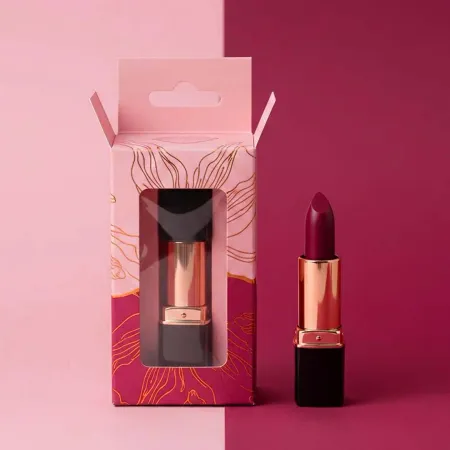 Lipstick Boxes
- Closure
- Straight tuck
- Board
- SBS or kraft
- Used for
- Lipsticks and lip balms
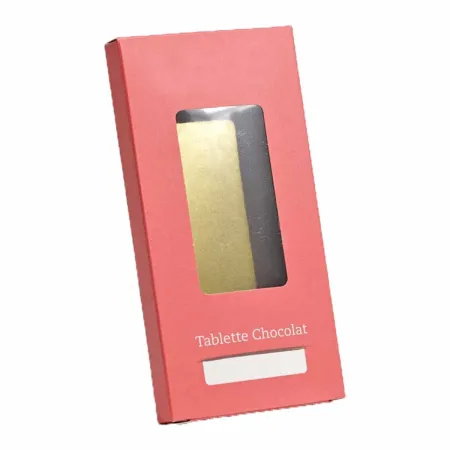 Chocolate Bar Boxes
- Closure
- Straight tuck
- Board
- SBS or kraft
- Used for
- Chocolate bars
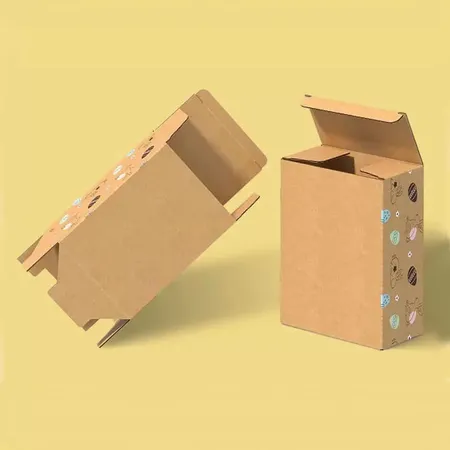 Tuck End Auto Bottom Boxes
- Closure
- Auto bottom
- Board
- SBS or kraft
- Used for
- Jars, bottles and fast packing
Design Your Box
Pick a box from our photos, place your logo, choose a board colour and send it. We turn it into a free design proof.
Choose a box
Place your logo
Upload a logo to see it on the box
Selected: Display Tuck Boxes
Send us the full brief
Give us what you know, rough numbers included. A real person reads it and replies with a written price.
| Price | From £0.25 per unit, on a written quote |
|---|---|
| Proof | Free, before anything is printed |
| Production | 4–6 business days after approval |
| Delivery | Free and tracked, UK only, 2–3 business days |
Prefer to talk? Call +44 7578 382054 or message us on WhatsApp.